

Technically Right, Market Wrong: Why Dr. Wagle’s Economic Logic Clashes with NEPSE Reality

Tue, Aug 25, 2026 3:22 PM on Economy, Stock Market, National, Exclusive,
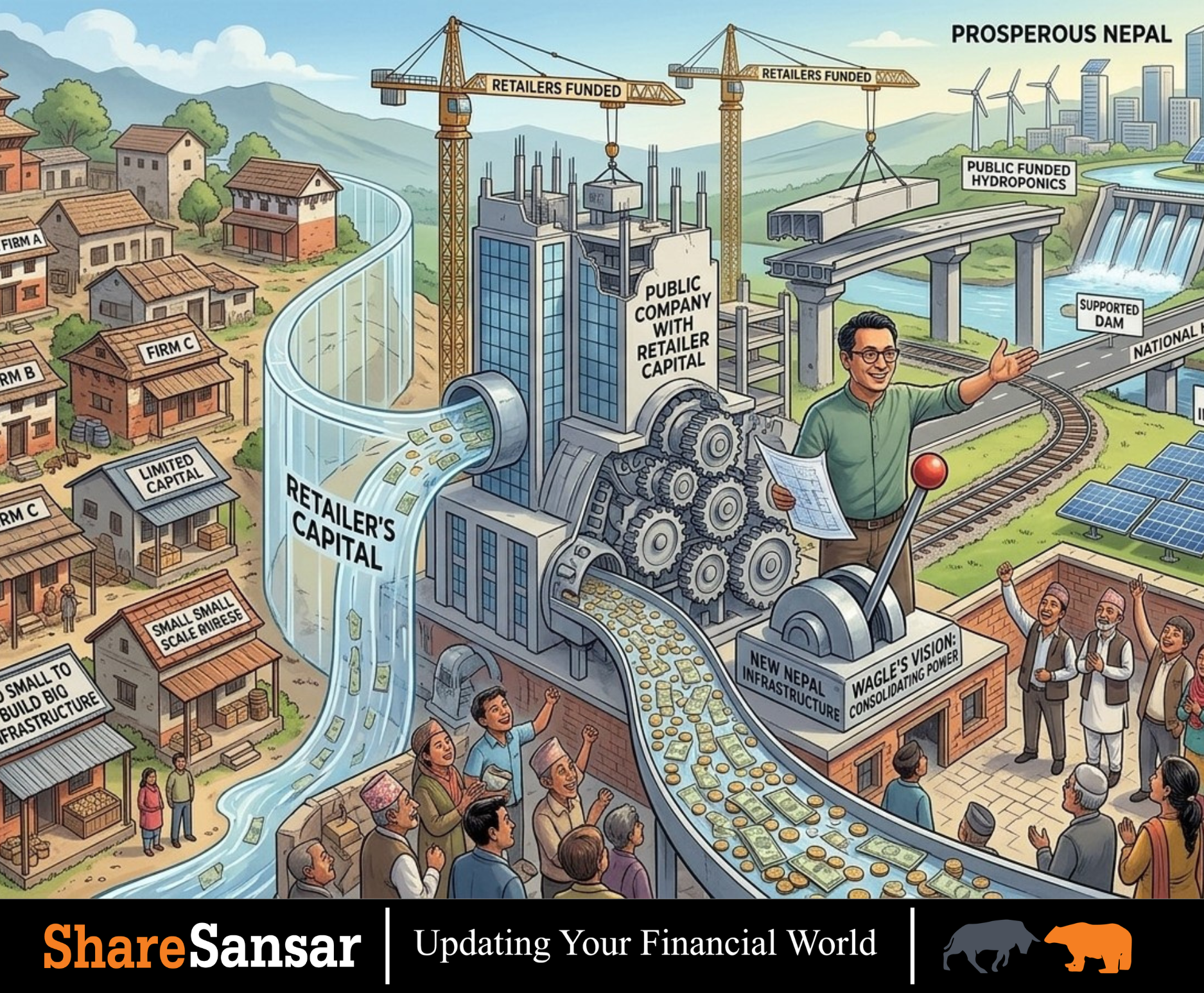
In macroeconomic theory, clean governance, strict regulatory compliance, and structural reforms are the pillars of long-term economic stability. From an academic standpoint, a policy agenda centered on removing a country from the FATF grey list, investigating insider trading, and preventing powerful cartels from capturing the financial system is a goal no reasonable observer can argue against.
Yet, on the floor of the Nepal Stock Exchange (NEPSE), theory collides directly with cash flow and trader behavior.
When Finance Minister Dr. Swarnim Wagle addresses the market, emphasizing that the government prioritizes long-term capital and institutional reforms over short-term index fluctuations, his logic is understandable. However, the disconnect between top-down macroeconomic priorities and the ground-level mechanics of NEPSE helps explain why market sentiment can remain weak even when official policy is aimed at strengthening the financial system.
The Friction Between Reform and Liquidity
Dr. Wagle’s public statements reflect a traditional technocratic approach: enforce transparency, investigate market manipulation, and build world-class financial institutions. While these steps protect long-term market integrity, daily trading operates on risk appetite, clear leverage parameters, and monetary flow.
- Compliance Uncertainty vs. Market Morale: Sweeping regulatory crackdowns and aggressive financial investigations naturally breed caution. When retail and institutional capital fear regulatory overreach or sudden compliance shifts, money moves straight to the sidelines.
- Macro Horizons vs. Micro Realities: Policy reforms require years to yield measurable corporate earnings or structural GDP growth. Secondary market participants, however, navigate short- to medium-term liquidity cycles, interest rate movements, and central bank directives.
- The Valuation Gap: Macroeconomists often view rapid market expansions as speculative bubbles in need of correction. Active traders view those same expansions as critical liquidity windows necessary for capital distribution, turnover, and depth.
Bridging the Divide: Recognizing NEPSE's Socio-Economic Weight
A healthy capital market requires both structural integrity and active liquidity. Clean governance without investor confidence leads to market stagnation; high liquidity without regulatory standards invites systemic manipulation.
To bridge this disconnect, macroeconomic planning must acknowledge that NEPSE is not merely a speculative arena, but a vital economic engine delivering immediate tangible benefits to the national economy:
- Direct Tax Revenue Engine: Through capital gains tax (CGT), transaction levies, and regulatory fees, NEPSE generates billions of rupees directly into government coffers annually, providing instant, non-inflationary revenue to the state without relying on foreign aid or debt.
- Ecosystem of Employment: Beyond listed companies, the secondary market powers an entire domestic industry. It sustains thousands of direct jobs across brokerage firms, merchant banks, depository participants, financial media outlets, tech vendors, and independent advisory platforms.
- Retaining Talent and Capital Domestically: At a time when foreign labor migration drains Nepal's youth and domestic savings, active participation in the stock market offers young professionals, traders, and retail investors a viable path to earn, invest, and build wealth locally. This keeps capital circulating directly within the domestic economy instead of flying out as remittances or foreign investments.
Treat Investors as the Nation’s Own Children
Instead of viewing capital-market activity only through a narrow lens of unproductive speculation, Finance Minister Dr. Swarnim Wagle and economic policymakers should recognize investors as citizens who are putting their hard-earned savings into the domestic financial system. A supportive state does not need to choose between investor protection and market discipline. It should create an environment in which citizens can invest with confidence while ensuring that market participants follow transparent and fair rules. The government’s responsibility is therefore to protect market integrity without unnecessarily discouraging legitimate investment activity.
Article By: Ketan Bohara

