

Wellness Nepal Investment Summit 2026 Concludes with Call for Investment and Stronger Infrastructure
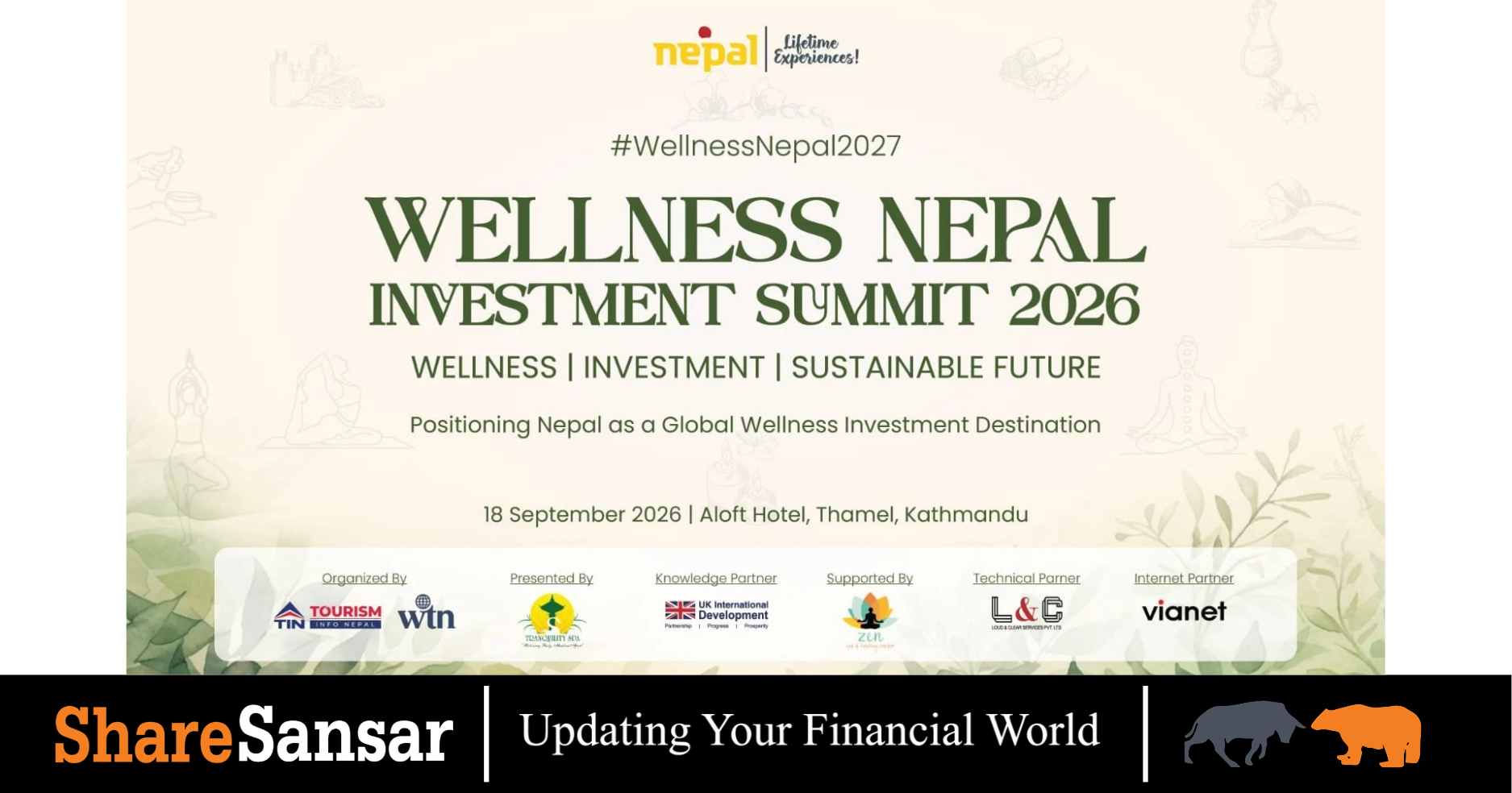
The Wellness Nepal Investment Summit 2026 concluded on Friday at Aloft Hotel, Thamel, Kathmandu, with government officials, tourism leaders, wellness professionals, investors and private-sector representatives calling for increased investment, stronger infrastructure, improved standards and skilled human resources to develop Nepal as a global wellness destination.
The summit was jointly organized by the World Tourism Network (WTN) and Tourism Info Nepal, bringing together stakeholders from the government, tourism, hospitality, wellness, healthcare and investment sectors to discuss Nepal’s wellness tourism potential, investment opportunities and policy priorities.
The programme featured presentations, experience-sharing sessions and panel discussions focusing on Nepal’s Himalayan environment, natural resources, Ayurveda, yoga, meditation and cultural heritage as key assets for developing wellness tourism.
The summit began with a sound healing meditation session led by Gaurav Baral, offering participants an experiential introduction to wellness practices.
Ram Dev Mahato, Chair of Zen Spa, followed with a presentation on wellness travel. He highlighted the growing demand for wellness-focused tourism and the importance of developing experiences combining relaxation, health, mindfulness and destination-based activities.
Former CEO of Nepal Tourism Board and founding member of WTN, Deepak Raj Joshi, said Nepal has significant potential in wellness tourism but lacks sufficient investment and infrastructure. He stressed that domestic and international investment would be essential to transform Nepal’s natural and cultural resources into competitive wellness destinations.
Suresh Puri, President of the Spa and Wellness Association of Nepal (SWAN), presented an overview of Nepal’s spa and wellness sector, highlighting its opportunities and challenges. He emphasized the need for professionalism, quality standards, skilled manpower and improved infrastructure.
Puri also called for greater coordination among wellness businesses, hotels, resorts, tourism companies, government agencies and investors to create integrated wellness experiences.
Bhuwan Paiju, Chair of Tranquility Spa, presented “A Story of Tranquility Spa: Experience and Scope,” sharing experiences from the wellness sector and opportunities to connect spa services with tourism, hospitality, natural healing, lifestyle and destination experiences.
He emphasized stronger cooperation among private businesses, government agencies, investors and tourism stakeholders to develop quality wellness products and services.
Sudip Bhaju, Private Sector Development and Investment Advisor, gave a presentation on Nepal’s Wellness Tourism Strategy and the government’s direction for developing the sector.
Nepal has adopted the National Wellness Tourism Strategy 2026–2035 and announced 2027 as Nepal Wellness Tourism Year, providing a policy framework for strengthening the sector and its international competitiveness.
Defence Secretary Indu Ghimire said the strategy has identified five major objectives and 37 strategies, covering areas such as destination competitiveness, quality and standards, human resource development and market promotion. She stressed the need for effective implementation.
Investment Board Nepal CEO Yanki Ukyab said IBN is ready to facilitate foreign investment in Nepal’s wellness tourism sector. She said the board could assist with issues related to land, roads and legal processes, while urging the private sector to present investment-ready projects with clear commercial structures.
WTN Chairman Juergen Steinmetz said wellness travellers generally tend to stay longer and spend more than conventional tourists. He encouraged Nepal to focus on distinctive and authentic wellness experiences based on its Himalayan environment, spiritual traditions and cultural heritage.
Meanwhile, Dr. Dibyaraj Pokharel, Executive Director of NATHM, said skilled human resources would be crucial for the sector’s expansion. He said NATHM plans to introduce bachelor’s and master’s level courses incorporating subjects related to yoga, Ayurveda and spirituality from the upcoming fiscal year.
During a panel discussion, Hitesh Golcha, Founder and Managing Director of Kavya Resorts and Spa; Ramesh Hamal, Managing Director of Omstone Hotels Ltd. (Dusit Thani Dhulikhel); and Amritanjali Shakya, Executive Director of Park Village Resort, highlighted challenges faced by private investors.
They called for simplified legal and administrative procedures and targeted incentive packages for a defined period to encourage investment in wellness tourism infrastructure and services.
The summit highlighted that Nepal’s wellness tourism potential extends beyond spas and resorts to Ayurveda, yoga, meditation, natural healing, spirituality, healthcare, hospitality and nature-based experiences.
Participants emphasized the need for improved infrastructure and accessibility, quality standards, skilled human resources, investment facilitation and stronger international marketing to build competitive wellness destinations.
Concluding the summit, Tourism Info Nepal Managing Director Bishwo Bhandari said stronger government-private sector coordination would be essential to attract foreign investment and develop Nepal’s wellness tourism industry.
He said the summit provided a platform for government representatives, investors, tourism entrepreneurs and wellness-sector stakeholders to exchange ideas and identify opportunities for developing a stronger wellness ecosystem.
The summit concluded with a call for coordinated action to transform Nepal’s natural, cultural and wellness resources into sustainable tourism products and strengthen the country’s presence in the international wellness tourism market.

