


Policies & Programs 2083 - Devbhumi to Digital Hub: Bridging Heritage and Innovation

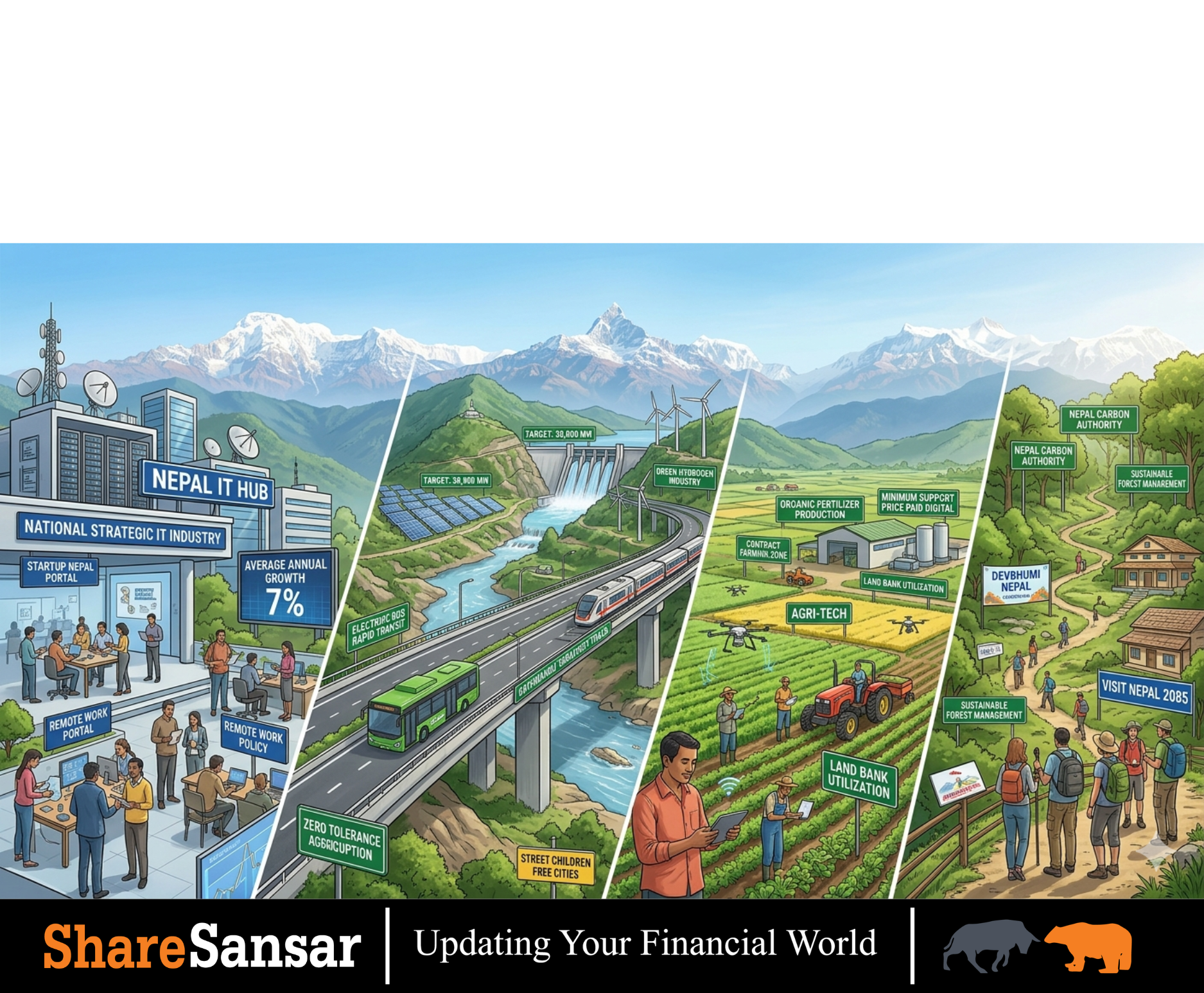
The Government Policies and Programs for 2083 (2026/27) outline a transformative roadmap for Nepal, shifting toward a digital, green, and self - reliant economy. The comprehensive plan can be summarized into these seven major pillars:
Economic Reform and Financial Stability
The government aims for a 7% annual growth rate to transition Nepal into a middle-income country. Key strategies include introducing a "New Economic Reform Agenda," automating tax systems (VAT/refunds), and establishing a "Green Tax System." Critical focus is placed on resolving the cooperative crisis by establishing a Depositors' Protection Fund and strengthening capital markets to attract diaspora (NRN) and institutional investment.
Digital Transformation and IT Industry
Information Technology is declared a National Strategic Industry. The government plans to establish Nepal as a global IT hub through digital parks, AI integration, and a "Borderless Economy" strategy. Legal recognition for international payment gateways and "Remote Work" policies aim to modernize the workforce, while the "Startup Nepal Portal" will offer one-day business registration.
Energy, Water, and Climate Action
A massive target of 30,000 MW of electricity production within a decade is set, alongside the promotion of Green Hydrogen and Ammonia industries. The government remains committed to Net Zero 2045 and will establish the Nepal Carbon Authority to monetize carbon trading. River basin management and the expansion of irrigation via solar and groundwater systems are also prioritized.
Agricultural Modernization and Land Reform
Agriculture is being repositioned as a dignified entrepreneurship through "Agri-Tech" and mechanization. Key initiatives include fixing Minimum Support Prices (MSP) before plantation, digital payments to farmers, and the creation of Land Banks to utilize barren land. The plan also integrates land survey and revenue services into a single digital platform to solve landless and informal settler issues.
Infrastructure and Connectivity
Priority is given to completing the Kathmandu-Tarai Fast Track and upgrading national highways to all-weather roads. Urban transport reforms include the introduction of Bus Rapid Transit (BRT) in Kathmandu and AI-based traffic management. Railway studies for the Kerung-Kathmandu and Raxaul-Kathmandu lines will advance, alongside the full operation of new international airports.
Tourism and "Devbhumi Nepal"
Under the "Devbhumi Nepal" campaign, the country will be marketed as a global spiritual and adventure hub. Preparations for "Visit Nepal 2085" will begin, supported by the branding of 5,000 new homestays and the implementation of e-gates and online visa systems at airports to enhance the tourist experience.
Social Justice, Education, and Health
The period of 2083–2093 is declared the "Employment Promotion Decade" to formalize the informal sector. The government guarantees free secondary education, integrates AI into classrooms, and restructures health insurance. A "Zero Tolerance" policy toward gender-based violence and a commitment to making Nepal street children free within the fiscal year underscore the social agenda.

