

Balen Government Unveils Ambitious Five-Year Economic Blueprint Targeting $3,000 Per Capita Income
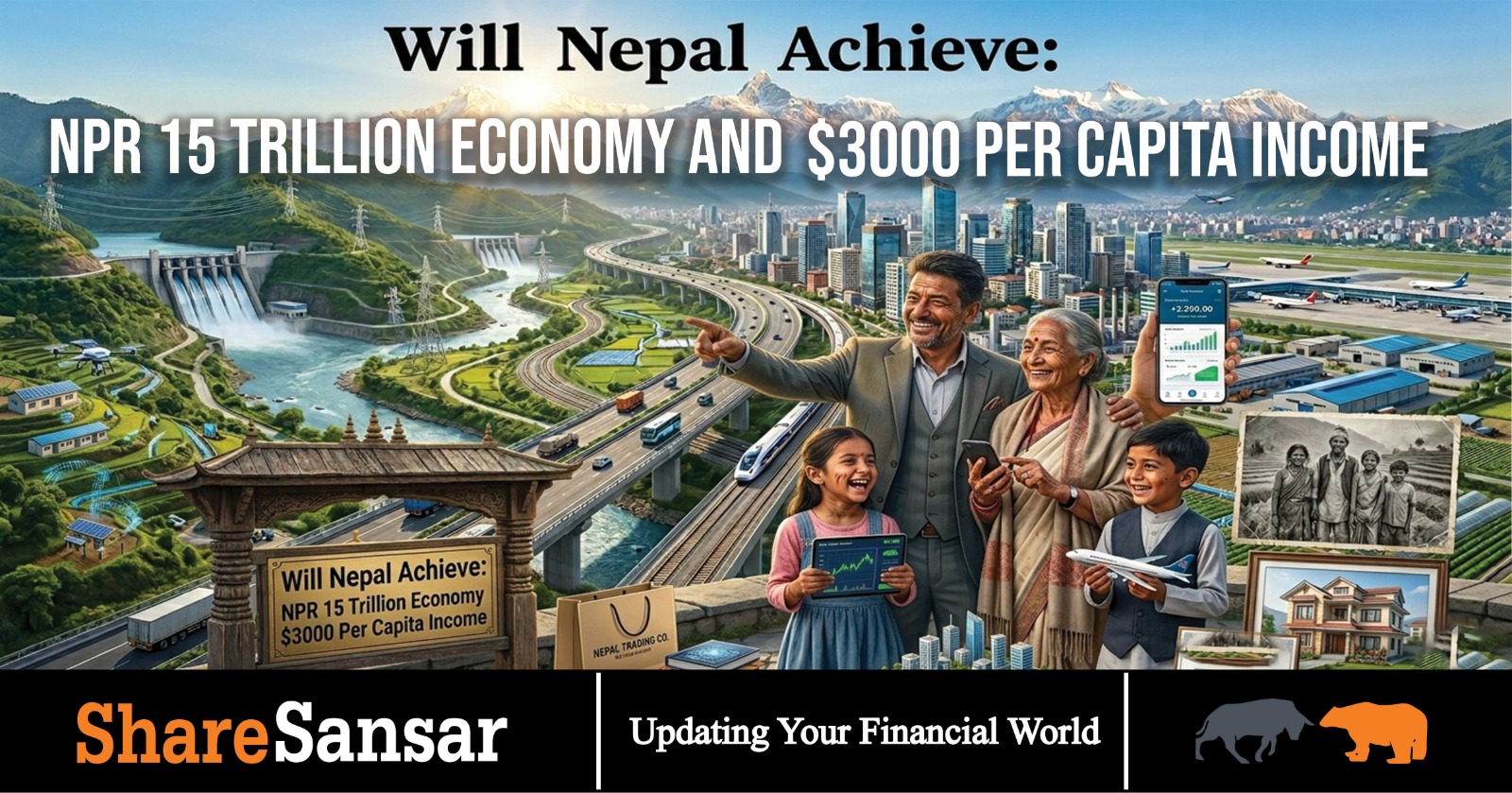
Newly formed Government has unveiled an ambitious draft of its five-year commitment plan, setting bold economic targets that aim to significantly transform the country’s economic landscape. The plan envisions raising per capita income to USD 3,000 and expanding the national economy to NPR 15 trillion (150 Kharba) within the next five years.
Prepared by consolidating key agendas from major political parties, the draft has been released for stakeholder consultation and is expected to guide the formulation of the upcoming national budget. At present, Nepal’s per capita income stands at approximately USD 1,517, while the country’s GDP is estimated at around NPR 6.1 trillion. Government officials acknowledge the targets are challenging but maintain that they are achievable under conditions of political stability and effective policy execution.
The plan outlines a comprehensive strategy to accelerate economic growth through structural reforms, private sector engagement, and large-scale infrastructure development. Authorities have indicated that the upcoming budget will emphasize liberal and investment-friendly policies, with a strong focus on positioning the private sector as the primary driver of economic activity.
A central pillar of the blueprint is job creation, with a target of generating 1.5 million employment opportunities over the plan period. In parallel, the government aims to reduce the national poverty rate to 10 percent while improving financial transparency and strengthening regulatory frameworks to enhance investor confidence.
To attract both domestic and foreign investment, the government has committed to maintaining stable tax policies for up to a decade and simplifying business procedures through digital transformation. Plans are underway to streamline processes such as company registration and renewal, making them more efficient and accessible. Additionally, foreign direct investment will be encouraged through legal frameworks that promote production, technology transfer, and employment generation.
The draft also prioritizes infrastructure and energy development. Nepal has set a long-term goal of generating 30,000 megawatts of electricity over the next decade. Major highways, including the Mahendra Highway, are expected to be upgraded to international standards within three years. Institutional reforms are also proposed, including restructuring the Civil Aviation Authority into separate regulatory and service entities.
In the agriculture sector, the government aims to modernize farming practices and improve farmer welfare through initiatives such as a “Farmer Credit Card” and contribution-based pension schemes. Expansion of irrigation coverage by an additional 300,000 hectares is also targeted, with the broader goal of making agriculture a more productive and respected profession.
The plan further highlights the importance of digital transformation and human capital development. The government intends to introduce digital skills, including coding and artificial intelligence, from the school level and promote IT as a strategic national industry. A dedicated IT Promotion Board is also proposed to support this vision.
To strengthen governance and service delivery, the blueprint includes measures to depoliticize public institutions, digitize administrative systems, and improve efficiency through technology-driven solutions. Initiatives such as a unified digital citizen platform and a “one citizen, one health profile” system are expected to enhance public service access and transparency.
Recognizing the importance of policy continuity, the government has called for a broader political consensus on key economic priorities, including the proposal for a common economic charter among major parties. The plan also seeks to engage the Nepali diaspora by addressing issues such as double taxation and offering incentives for investment and return.
Overall, the draft five-year commitment plan reflects a strong push toward economic reform, institutional modernization, and sustainable growth. While the targets are ambitious, their success will largely depend on consistent policy implementation, political stability, and the government’s ability to translate vision into action.
Conclusion:
As we keep seeing, the newly formed government seems ambitious and purposed big plan. Things get stuck on policy level implementations; the policy itself seemed hurdles for the nation’s rapid growth. In pointwise governments should prioritize followings execution.
- Transparency in all governmental financial activities (i.e., revenue collection & expenditure)
- The government should prioritize to spend fund on major infrastructure and ensure timely completion. Infrastructure that boosts factor of production i.e., efficient transportation, irrigation, energy, mining, manufacturing and production.
- The government plans to generate 15,000 megawatts of electricity. The Government should ease policy, give a confident on energy producers and build a more efficient way to optimize electricity production and utilization.
- To optimize the farmers', return and increase agricultural productivity. The government should prioritize irrigation projects and ensure timely completion. Modernization and mechanization of agricultural sectors.
- As one of the prominent sectors is tourism, the government should build the business verticals. i.e., international airlines, domestic airlines and airports, hotels, transportation, entertainment and digital-based immigration systems.
- The government should promote and motivate cottage businesses to go corporate, large businesses with scalability. New investment in existing prominent sectors, as well as innovative sectors, should be promoted.
- Digital and seamless entry and exit policy for firms.
- Another side is that the government may gain a lot by enrolling the informal sectors into the national account mechanism.
- Making capital market more liquid, wider, transparent and dynamic. The government should prioritize upgradation of the stock market.
- If the government works persistently and in creative way targets are achievable.

