

NRB Hosts Inter-Agency Dialogue to Strengthen Financial Governance and Combat Financial Crime
Tue, Sep 22, 2026 12:25 PM on Highlight News, Economy, National,
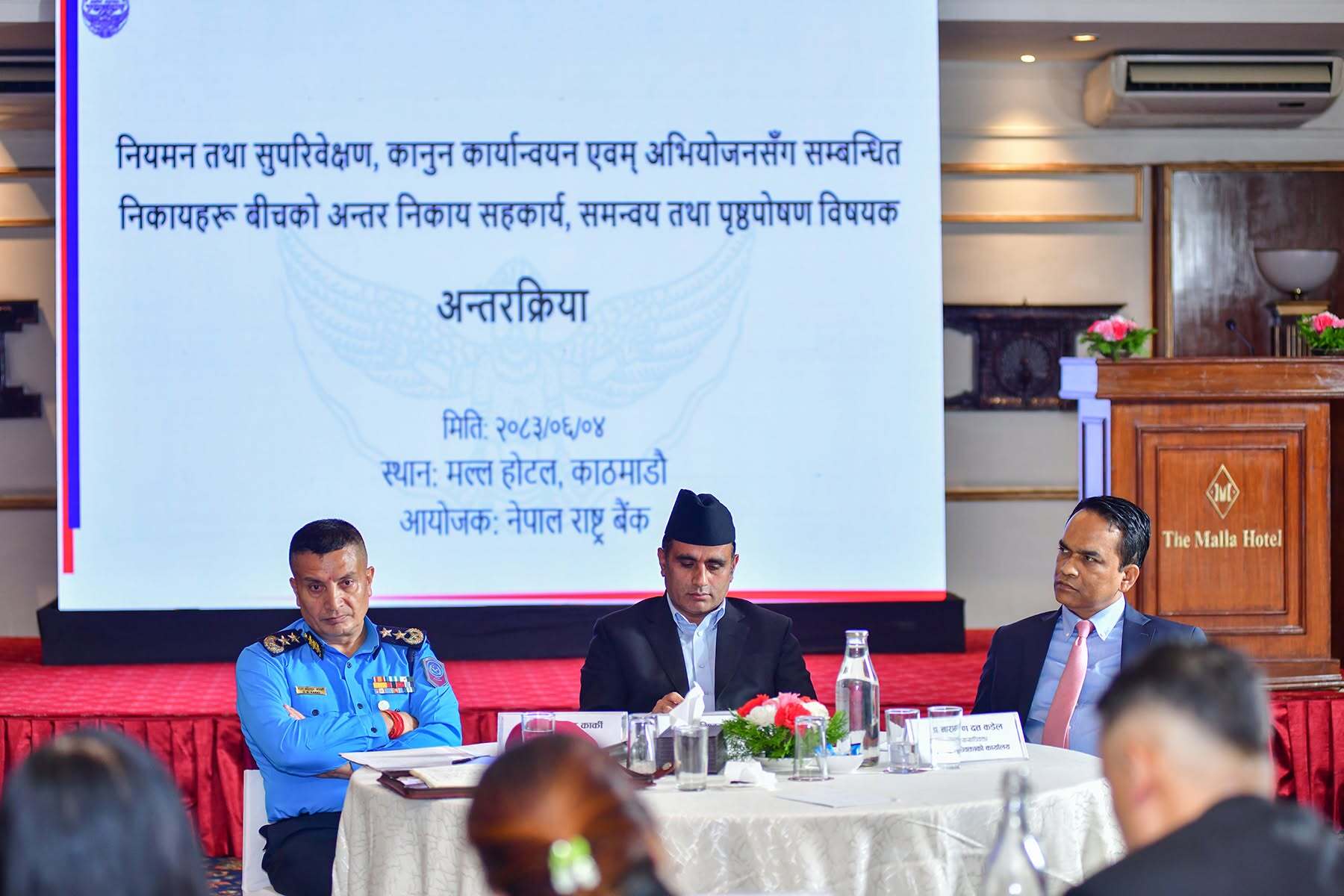
An interaction programme aimed at strengthening cooperation, coordination and feedback among regulatory, supervisory, law enforcement and prosecution agencies to enhance financial governance was held in Kathmandu on Ashwin 4, 2083.
The programme was organised by Nepal Rastra Bank (NRB) under the chairmanship of Governor Prof. Dr. Biswo Nath Poudel, with Attorney General Dr. Narayan Datta Kadel as the chief guest.
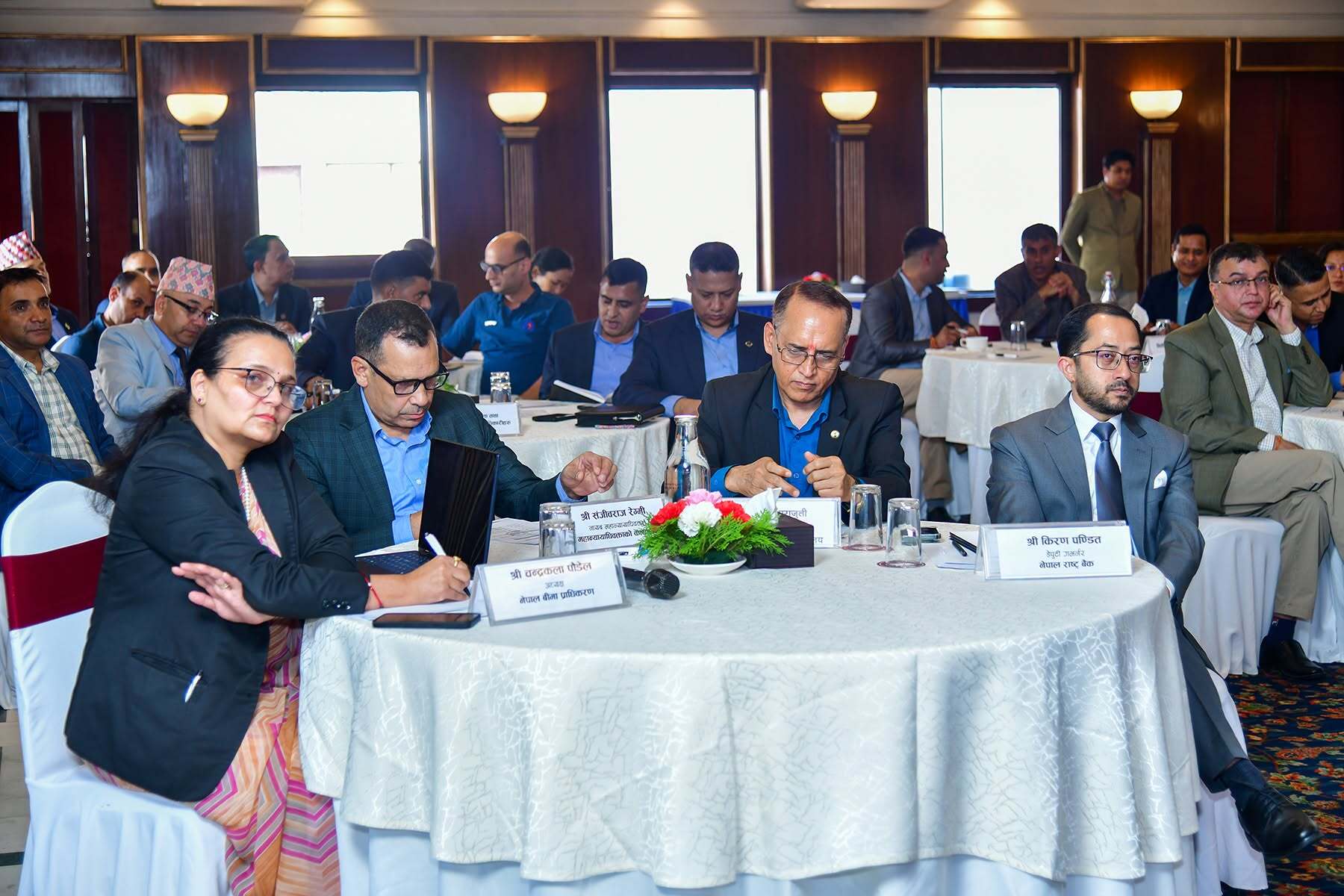
Senior officials and representatives from regulatory, investigative and prosecutorial agencies attended the programme, including Deputy Attorneys General Sanjiv Raj Regmi and Lok Raj Parajuli, Nepal Government Secretary and Nepal Insurance Authority Chairperson Chandrakala Poudel, Inspector General of Police Dan Bahadur Karki, NRB Deputy Governors Kiran Pandit and Dirgha Bahadur Rawal, and Central Investigation Bureau (CIB) chief Uma Prasad Chaturvedi.
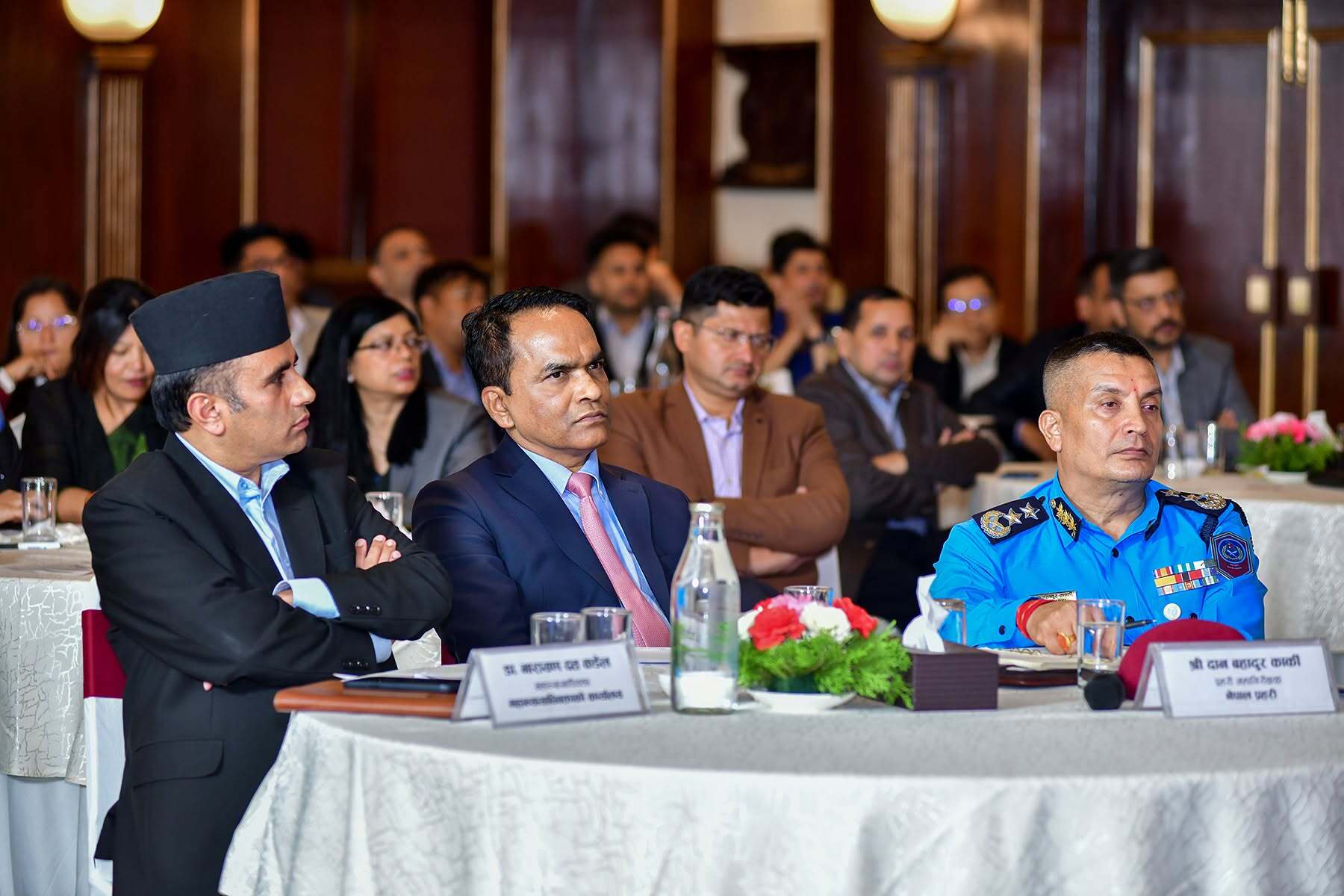
Addressing the programme, Attorney General Dr. Kadel said that studies and processes for amending existing laws are being advanced at the ministry level to address shortcomings identified in prevailing legislation.
He said the Office of the Attorney General would continue to play an active role in efforts to combat financial crimes and strengthen the country's financial governance framework. Governor Poudel said financial governance is a common concern of all state agencies, rather than the responsibility of Nepal Rastra Bank alone. He noted that different agencies can sometimes have different interpretations of the same issue, making regular interaction and coordination among institutions important.
Poudel further stressed the need for government agencies to remain vigilant to ensure that financial resources do not end up in the hands of inappropriate individuals or entities. He said this required adopting a "whole-of-government approach", under which a common direction is established, and each agency acts within its respective jurisdiction.
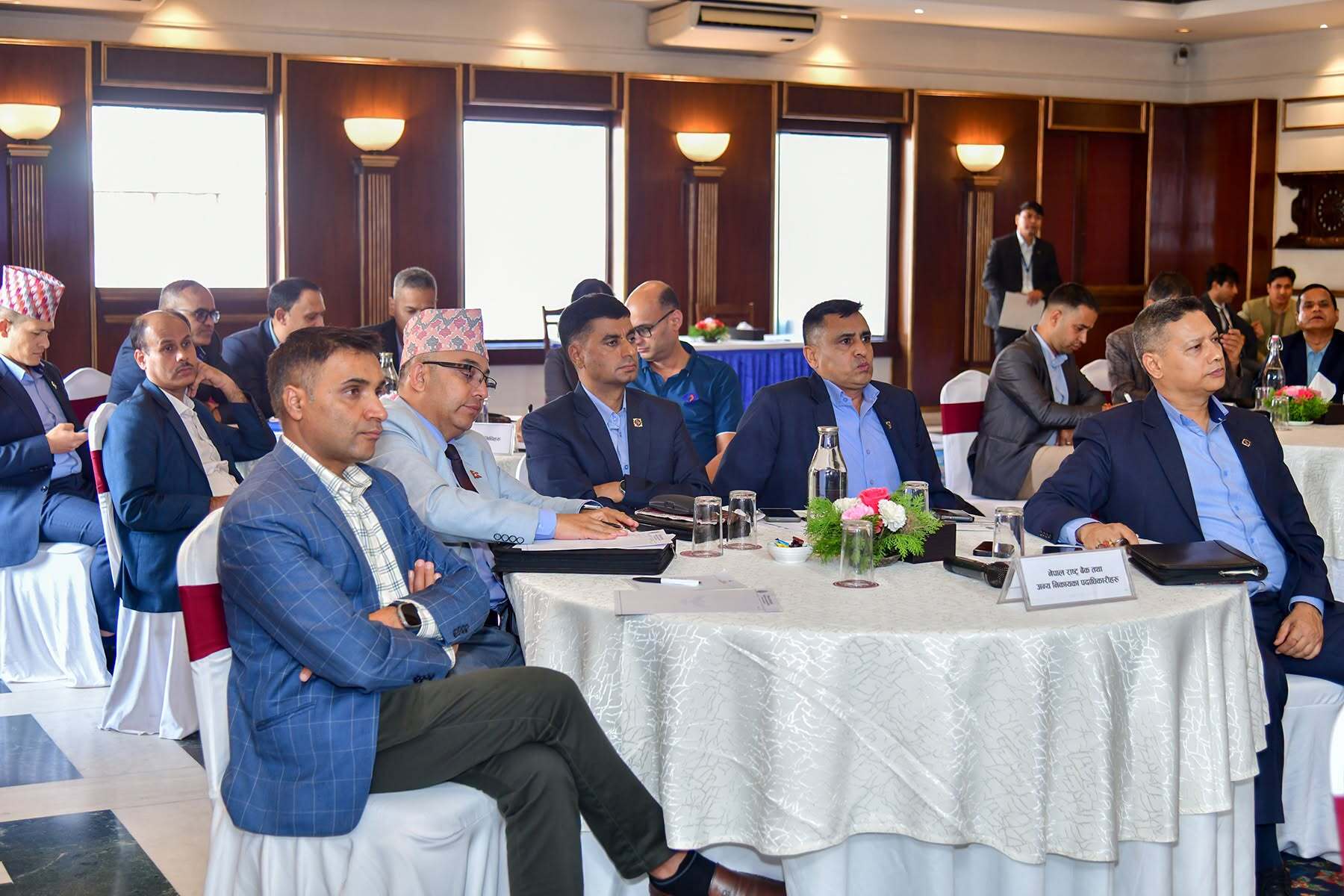
The Governor also expressed the belief that stronger inter-agency coordination would contribute to maintaining financial governance and developing a common understanding of anti-money laundering (AML) measures, ultimately supporting Nepal's efforts to exit the Financial Action Task Force (FATF) grey list.
Inspector General of Police Dan Bahadur Karki said controlling financial crime is possible only through joint efforts among concerned agencies. He noted that both the number and complexity of financial crimes have increased in recent years. According to Karki, financial crime investigation has been given greater priority, while efforts are also being made to strengthen the capacity of the Central Investigation Bureau. He said training and capacity-building programmes for law enforcement personnel have also been focused accordingly.
The interaction programme was conducted in three sessions. In the first session, Dilliram Neupane, Deputy Director at NRB's Legal Division, presented a paper on "Regulation and Supervision of the Banking Sector." The presentation covered NRB's supervisory jurisdiction in areas including prudential regulation, market conduct, and anti-money laundering. It also discussed the distinction between supervision and criminal investigation, the limits of supervisory authority, and the administrative nature of regulatory actions.
In the second session, Senior Superintendent of Police Rishiram Kandel of the Nepal Police Central Investigation Bureau presented a paper on "The Current State, Trends and Challenges of Economic and Financial Crime Investigation." Kandel said financial crime cases had increased by around four-and-a-half times over the past five fiscal years.
He stated that economic and financial crimes account for approximately 28% of total cases, with around 84% of those cases related to banking offences. A large majority of banking offence cases, he noted, are related to cheque dishonour. Kandel also said that the Financial Information Unit had forwarded 132 intelligence reports to Nepal Police during the current fiscal year. These reports were related to areas including hundi transactions, virtual currency and technology-based fraud. He highlighted the rapid growth of technology-based fraud and the expansion of "money mule" networks as emerging challenges for financial crime investigation.
The third session featured a presentation by Nirmal Dhakal, Director General of the Department of Money Laundering Investigation, on "The Anti-Money Laundering System: The Perspective of Law Enforcement Agencies." Dhakal discussed the changing nature of financial crimes, increasing use of technology, transnational and organised crime, and the misuse of complex ownership structures.
He identified several immediate priorities for Nepal's efforts to exit the FATF grey list, including completing the required actions by January 2027, improving the effectiveness of risk-based supervision, strengthening the investigation and prosecution of complex offences, and advancing the freezing, confiscation and recovery of assets.
Dhakal emphasised the need to connect reporting entities, regulatory bodies, the Financial Information Unit and law enforcement agencies through a common "intelligence cycle." He called for joint financial investigations based on the principle of "follow the money, follow the assets, asset recovery."
Following the three presentations, participants engaged in discussions on financial regulation, supervision, investigation, prosecution, and anti-money laundering measures. NRB Deputy Governor Dirgha Bahadur Rawal facilitated the discussion session.
Representatives from Nepal Rastra Bank, Nepal Police, the Department of Money Laundering Investigation, the Financial Information Unit, the Securities Board of Nepal (SEBON), Nepal Insurance Authority, the Office of the Attorney General, and other regulatory, investigative, and prosecutorial agencies participated in the programme. Executive Director of the Governor's Office, Guru Prasad Poudel, highlighted the need, relevance, and objectives of the interaction programme.

