


Iran Vows to Continue Fight as Trump Predicts Quick End

Tue, Mar 10, 2026 12:28 PM on Latest, Economy, International,

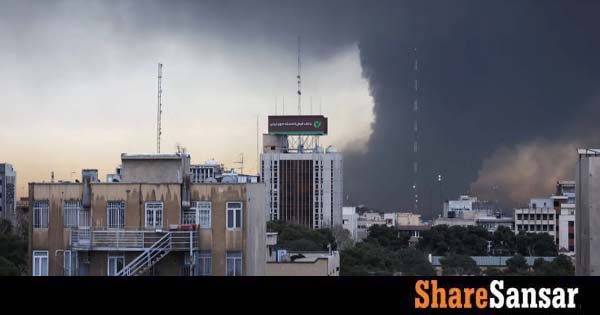
Iran’s Foreign Minister Abbas Araghchi declared on Tuesday that his country is prepared to continue military operations for as long as necessary, challenging US President Donald Trump’s assurance that the conflict would conclude “soon.” Araghchi, one of Iran’s top officials, also ruled out any negotiations with Washington, citing a “very bitter experience” in past talks.
“The firings continue, and we are well prepared to continue attacking them with our missiles as long as needed,” Araghchi told PBS News. Iran’s Revolutionary Guards echoed the stance, asserting they would “determine the end of the war.”
On Monday, Trump described the US campaign as a “short-term excursion,” promising a swift conclusion and threatening an attack of “incalculable” magnitude should Tehran block oil supplies. He warned that the US would hit Iran so hard that “it will not be possible for them or anybody else helping them to ever recover that section of the world.”
Trump’s comments reversed a recent slide in global markets. Asian indices in Tokyo and Seoul opened strongly, and oil prices fell as much as five percent, following a brief surge in benchmark crude past $100 per barrel.
Early Tuesday, Iran launched fresh attacks targeting Gulf nations. The United Arab Emirates reported responding to incoming missile and drone threats, while Bahrain urged citizens to take shelter as sirens sounded. Saudi Arabia and Kuwait intercepted and destroyed several drones.
Iranian local media reported missile launches in the capital and Khomein, and Israel struck an Iranian missile launcher following Iranian attacks that triggered warnings in multiple regions. The escalation has caused global market uncertainty, fuel shortages, and inflation concerns.
In response, Trump announced a waiver on some oil sanctions after talks with Russian President Vladimir Putin, aiming to stabilize prices. Iran has also targeted vessels transiting the Strait of Hormuz, a critical passage for nearly 20 percent of the world’s crude oil.
French President Emmanuel Macron said his country and allies are planning a “purely defensive” mission to escort ships through the strait once the “hottest phase of the conflict” ends.
Iran’s new supreme leader, hardliner Mojtaba Khamenei, succeeded his father, killed on the first day of US-Israeli strikes. State media reported tens of thousands celebrating in central Tehran, many holding his portrait. Trump dismissed the new leader as a “lightweight,” suggesting he should be involved in choosing Iran’s leadership.
The conflict has expanded beyond Iran, drawing in Lebanon and Israel. Israel conducted fresh strikes in Lebanon on Tuesday. Lebanese authorities reported that attacks since March 2 have killed at least 486 people and wounded over 1,300.
Iran-backed Hezbollah launched attacks on Israel following the killing of Iran’s former supreme leader. Lebanese President Joseph Aoun accused Hezbollah of attempting to destabilize the state, while the group defended its actions as “resistance.”
Syria condemned Hezbollah’s actions, warning that its army “will not tolerate any aggression.” The conflict has displaced over 660,000 Lebanese, forcing families like Zainab El Masry’s to sleep on Beirut pavements with minimal food supplies.
The war coincides with the Muslim holy month of Ramadan, adding to civilian hardships. In Iran, residents are struggling with rising prices and limited banking access. Reza, a cafe manager in Boukan, described the situation: “Banks no longer distribute cash, and many bank cards are blocked. For those who can't pay for their coffee, it's on the house.”

