

US–Israel Strikes on Iran Trigger Regional Escalation; Tehran Reports Death of Supreme Leader
Sun, Mar 1, 2026 11:37 AM on Latest, International,
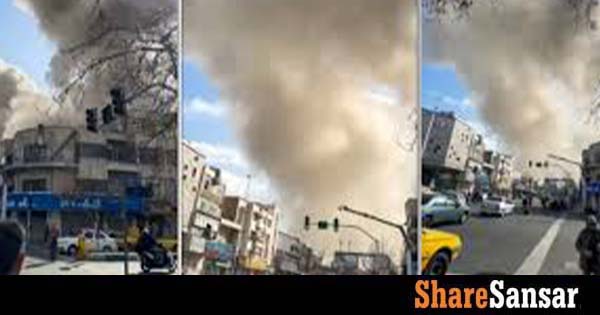
The United States and Israel launched coordinated waves of airstrikes on targets in Iran on Saturday, sharply escalating tensions in the Middle East and prompting swift retaliation from Tehran.
US President Donald Trump said the strikes were aimed at eliminating what he described as “imminent threats,” adding that military operations could continue “as long as necessary.” Iranian state television reported early Sunday that Supreme Leader Ayatollah Ali Khamenei had been killed in the attacks, announcing a 40-day mourning period and national holidays. The reports also said several of his family members died. Independent verification of these claims was not immediately possible.
Iran’s judiciary stated that senior security figures, including Revolutionary Guards chief Mohammad Pakpour and adviser Ali Shamkhani, were also killed. The country’s leadership is expected to be overseen temporarily by President Masoud Pezeshkian and other senior officials during a transitional period, according to state media.
US Defense Secretary Pete Hegseth said the campaign was intended as a warning to those threatening American interests.
Israeli Prime Minister Benjamin Netanyahu said the operation targeted locations where senior Iranian officials had gathered, as well as missile infrastructure. Israel’s military reported that roughly 200 fighter jets struck more than 500 targets in what it described as an extensive pre-emptive attack.
Iranian authorities, meanwhile, reported civilian casualties in several locations, including an incident in Minab. Journalists were unable to independently confirm details surrounding the reports.
In response, Iran’s Revolutionary Guards said they launched missiles and drones toward Israeli territory and targeted US military assets in the Gulf, including the US Fifth Fleet in Bahrain. Israeli emergency services reported casualties and injuries in the Tel Aviv area as projectiles struck multiple sites.
Iranian forces warned that further action could follow, describing upcoming operations as severe retaliation against both countries.
Blasts were reported in several Gulf states, including the United Arab Emirates, Saudi Arabia, Qatar, and Bahrain, as air defenses responded to incoming missiles and drones. Some casualties were reported across the region.
Iran also moved to close the Strait of Hormuz, a critical global energy corridor through which a large share of the world’s oil and gas supply passes, raising concerns about potential disruptions to international markets.
The United Nations Security Council convened an emergency meeting. UN Secretary-General Antonio Guterres warned that continued military action risked “a chain of events that no one can control.”
The European Union described the developments as “perilous,” while Russia condemned the strikes as a dangerous escalation that could lead to regional catastrophe. Lebanon-based Hezbollah called for regional opposition to the attacks.
Several countries, including Iran, Iraq, Kuwait, Syria, the UAE, and Israel, closed their airspace fully or partially, forcing airlines to cancel or reroute flights across the Middle East. Russia also suspended commercial flights to the affected areas until further notice.

