


The Leveraged Gamble: How Margin Lending Is Reshaping NEPSE – and Risking Investors' Futures

Mon, Apr 20, 2026 9:04 AM on Stock Market, National, Latest,

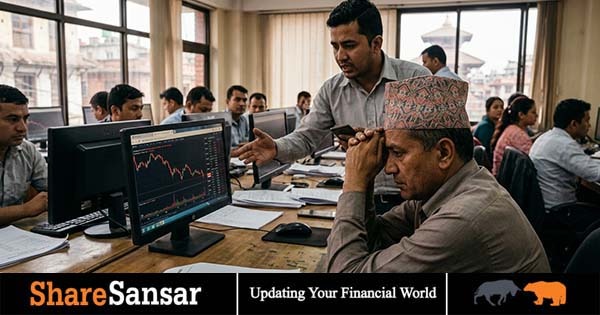
“Leverage amplifies ambition – but it also magnifies every mistake.”
Introduction
After nearly a decade of deliberation, Nepal's Securities Board (SEBON) has formally launched margin trading through licensed stock brokers. Under the Margin Trading Facility Directive 2082, effective from Baishakh 2, 2082, retail investors can now borrow money from their brokers to buy listed shares. This facility has been available in international markets and has now arrived in Nepal backed by formal regulatory approval.
On paper, margin lending promises deeper liquidity, better price discovery, and greater participation in Nepal's stock market. In practice, it is a powerful but dangerous tool. It can multiply your gains – but it can equally wipe out your savings. For a market like NEPSE, where most participants are retail investors and financial literacy is still growing, margin trading is not just an opportunity. It is a high-stakes test of discipline, regulation, and awareness.
What Is Margin Trading?
Margin trading simply means borrowing money from your broker to buy more shares than your own cash would allow. Think of it like a loan – except this loan is tied directly to your stock positions.
Here is how it works under the new SEBON directive:
- You deposit at least 30% of the purchase price. This is called the Initial Margin.
- Your broker lends you the remaining 70%.
- You must always keep at least 20% of the value of your shares as a Maintenance Margin.
A simple example: If you have Rs 3 lakhs of your own money, you can now buy shares worth Rs 10 lakhs. The broker gives you Rs 7 lakhs.
Who Benefits – And Who Must Be Careful?
The opportunity for retail investors
Before this directive, getting a share-backed loan from a bank was difficult. Most banks refused applicants with portfolios below Rs 10–15 lakhs. The process was slow and the collateral rules made it impossible to freely trade the shares you had pledged.
Now, with broker margin trading, even an investor with a modest portfolio can access leverage at expected interest rates of 10–12% per annum. Investors can buy and sell approved shares freely within a one-year renewable facility. Active traders can react quickly to market movements without the old hassle of paying off bank loans first.
But the risk is real
The same leverage that grows your gains can rapidly grow your losses too. A 10% fall in the market can wipe out a large part or all of your own invested capital. Investors who do not fully understand how margin works face serious financial danger.
How the Rules Work – And Where They Fall Short
SEBON’s directive sets clear boundaries to prevent excessive speculation:
- Brokers must have a minimum paid-up capital of Rs 20 crore and be registered as clearing members.
- Only shares in the ‘A’, ‘B’, or ‘G’ groups are eligible. At least 125 companies have been approved for margin trading.
- A single broker cannot lend more than five times its net worth in total margin credit.
- No more than 10% of a broker’s total margin facility can go to one investor or their immediate family.
- Each investor must have a separate Margin Trading Account and Margin Demat Account, kept apart from their regular trading account.
Where the framework still needs work: The directive does not require any mandatory financial education for first-time margin users. Brokers must complete KYC and sign agreements – but the depth of risk explanation varies. In a market where many investors still make decisions based on social media tips, a legal directive alone is not enough protection.
The Hidden Costs of Margin Trading
The most obvious danger is financial loss. But the damage runs deeper than just money.
For individual investors:
- Debt that does not disappear: If forced selling does not cover the full loan, you still owe the difference. Brokers can pursue legal recovery.
- Stress and anxiety: Borrowed money turns investing into a survival game. Constant pressure affects sleep, judgment, and overall well-being.
- Family impact: Money used for margin trading is money unavailable for household needs, children’s education, or emergencies.
- Long-term damage: A single bad margin position can erase years of savings, and the loan interest keeps adding up even as your portfolio shrinks.
For the broader NEPSE market:
- Forced selling cascades: When many margin calls hit at the same time during a market fall, mass forced selling pushes prices down further – which triggers more margin calls. This creates a dangerous downward spiral that harms all investors, not just those using margin.
- Broker risk: If many clients default at once, even the broker’s own financial stability can come under pressure.
- Loss of investor trust: If retail investors suffer heavy losses from margin, many may leave the stock market entirely which is bad for NEPSE’s long-term growth.
Why Retail Investors in Nepal Are More Vulnerable
Nepal’s retail investors are not careless but they face real disadvantages when it comes to margin trading.
- Margin trading is new and unfamiliar
For the vast majority of NEPSE investors, this is their very first encounter with margin trading. Most people have never placed a margin call, never experienced forced selling, and never had to top up a trading account under pressure. This is uncharted territory for the Nepali market. Without prior exposure or guidance, even experienced investors can misread how quickly situations can turn.
- The knowledge gap
Many investors do not fully understand what a margin call means, how forced liquidation works, or why price drops in a leveraged position hurt so much more than in a regular one. Some think of margin as simply “buy now, pay later” without realising that falling prices create immediate repayment pressure.
- Information is uneven
Institutional investors have research teams and risk tools. Most retail investors have a mobile app that shows available margin but does not adequately warn of what happens when that margin is used, and the market moves against them. Social media makes this worse: people share stories of margin-fueled gains but rarely post their losses.
- Psychological pressure
Behavioural research shows that people tend to be overconfident when markets are rising and panic when they fall. Margin trading plays on both tendencies. Investors sometimes add more borrowed money to losing positions hoping, prices recover and end up with even bigger losses when automatic selling kicks in at the worst possible moment.
Lessons from Other Markets
India’s NSE and BSE, Sri Lanka’s CSE, and markets across Southeast Asia all have margin trading. In most cases, it increased market depth and long-term participation. But regulators in these countries consistently point to one critical lesson: investor education must come first.
India, for example, requires mandatory risk disclosure videos and a cooling-off period before a new client can activate margin trading. Nepal has not yet adopted these kinds of safeguards. SEBON’s requirement for KYC and signed agreements is a good start but, the experience of other markets shows it is not sufficient on its own.
What You Can Do: A Call to Action
For investors:
- Treat margin like fire: useful when controlled, dangerous when it spreads. Never borrow more than you are truly prepared to lose.
- Keep a buffer: If the maintenance margin is 20%, act as if it were 30%. That buffer is your breathing room.
- Know your exit before you enter: Decide in advance at what price you will cut losses – and stick to that decision.
- If checking your portfolio is causing anxiety, you are probably over-leveraged. No trade is worth losing sleep over.
Conclusion: A Turning Point for NEPSE
Margin lending is a historic step toward modernising Nepal's capital market. It can increase liquidity, attract serious investors, and bring NEPSE closer to international standards. But without robust investor education and strict regulatory monitoring, it can also fuel reckless speculation and destroy household savings.
The future of margin trading in Nepal depends on a single question: Will leverage become a disciplined financial instrument or a shortcut to gambling? The answer lies not in the directive, but in how seriously every participant, regulator, broker, and investor takes the risk that comes alongside the opportunity.
“The real winner in NEPSE will not be the one who borrowed the most during the rally. It will be the one who survives the correction with their capital – and their confidence – intact.”
Article By: Safal Basyal
BBA Student, Pokhara University / Active NEPSE Trader

