

From Rivers to Riches: How Nepal Can Build a Clean Energy Economy for the Future
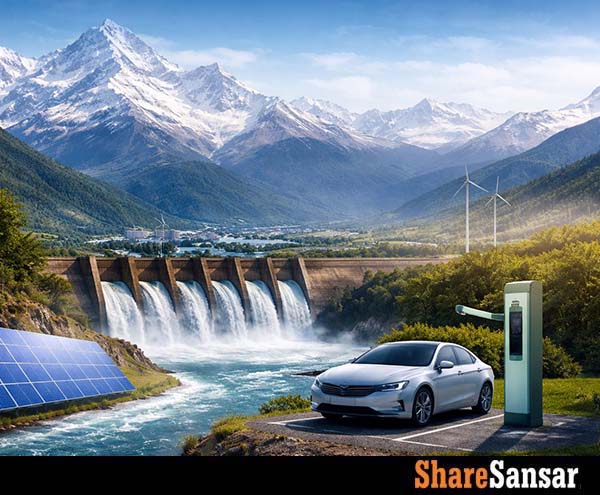
On a winter evening in Kathmandu, a familiar scene plays out across thousands of households. Gas cylinders are checked anxiously, petrol prices dominate conversations, and power, once unreliable, is now abundant but underutilized.
For decades, Nepal has been described as a “resource-rich but income-poor” nation. Yet, hidden in plain sight is a paradox that could redefine its future: a country with vast hydropower potential continues to import billions worth of fossil fuels every year. The question is no longer whether Nepal can develop; it is whether it can develop differently.
A Nation Flowing with Untapped Wealth
Nepal’s rivers, descending from the Himalayas, hold an estimated 83,000 MW of hydropower potential, one of the highest per capita in the world. Yet only a fraction of this capacity has been harnessed.
Compare this with countries like Norway, which transformed its natural resources into long-term national wealth through disciplined policy and strategic investment. Or Iceland, which leveraged cheap renewable energy to attract global industries like data centers. Nepal stands at a similar crossroads.
Recent progress offers a glimpse of what is possible. Nepal has already begun exporting surplus electricity to India and, more recently, to Bangladesh through regional grids, marking its entry into the regional energy market. But exports alone are not enough. The real opportunity lies within.
Electrify First: The Missing Link in Nepal’s Energy Strategy
Despite growing electricity production, Nepal remains heavily dependent on imported fossil fuels. Petroleum imports constitute one of the largest components of the country’s trade deficit. This is where a critical shift is needed: prioritize domestic electrification before large-scale exports.
Countries like Norway have demonstrated how aggressive electrification policies, particularly in transport, can drastically reduce fuel imports. Today, over 80% of new car sales in Norway are electric.
Nepal has already taken promising steps. Electric vehicles (EVs) are gaining traction, and public interest is growing. But scaling this requires coordinated policy:
● Incentives for EV adoption
● Nationwide charging infrastructure
● Subsidies for electric cooking to replace LPG
Every unit of electricity consumed domestically is a direct reduction in imported fuel, a silent but powerful economic reform.
Beyond Power: The Rise of a Circular Energy Economy
What happens when Nepal produces more electricity than it consumes?
In many countries, excess energy is wasted or sold cheaply. But forward-looking economies are turning surplus energy into new industries. Take green hydrogen.
Using electrolysis, electricity can split water into hydrogen and oxygen. Hydrogen can then be used to produce ammonia and urea, key components of fertilizer, while oxygen can support healthcare systems.
Countries like Saudi Arabia and Germany are investing billions into this future. Nepal, with abundant clean electricity, could leapfrog into this space. A domestic hydrogen-based fertilizer industry would not only reduce imports but also stabilize agricultural productivity. In a country where agriculture employs a significant portion of the population, this could be transformative.
The Industrial Opportunity: Turning Energy into Jobs
Cheap, renewable electricity is not just an energy asset; it is an industrial magnet. Iceland has successfully attracted global data centers by offering stable, low-cost renewable power and natural cooling conditions. Nepal, with its cooler climate and strategic location between India and China, has similar potential.
By developing energy-based industrial zones, Nepal can attract:
● Data centers
● Green manufacturing
● Fertilizer plants
● Cement and metal industries transitioning to clean energy
However, this requires more than electricity. Investors need:
● Policy stability
● Simplified approval processes
● Reliable infrastructure
Without governance reform, even the best ideas remain unrealized.
Water, Tourism, and the Power of Branding
Nepal’s comparative advantage is not limited to energy. Its natural brand, Himalayan purity, remains underutilized in global markets. Premium bottled water brands like Fiji Water have demonstrated how geography can be transformed into global value.
With proper certification and branding, Nepal could position itself in international markets, particularly in water-scarce regions like the Middle East.
Similarly, tourism must evolve. Countries like Bhutan have shown that fewer tourists with higher spending can generate more sustainable revenue than mass tourism.
Nepal, home to Everest and unparalleled natural beauty, can adopt a similar model:
● Eco-tourism
● Luxury trekking experiences
● Wellness and spiritual tourism
● Digital nomad ecosystems
Lessons from Global Success Stories
Across the world, successful development models share common principles:
● Resource Optimization → Norway turned oil into a sovereign wealth fund
● Energy Utilization → Iceland converted geothermal energy into industry
● Policy Consistency → Singapore built investor trust through stability
● Economic Diversification → The UAE moved beyond oil into tourism and finance
Nepal does not need to reinvent the wheel. It needs to adapt these models to its own context.
The Real Challenge: Execution, Not Vision
Nepal’s development challenge is not a lack of ideas; it is a lack of execution. Frequent policy changes, bureaucratic delays, and governance inefficiencies have historically slowed progress. For Nepal to succeed, three reforms are essential:
1. Policy Stability – Long-term commitments that survive political cycles
2. Ease of Doing Business – Faster approvals and reduced red tape
3. Institutional Accountability – Transparent and efficient governance
Without these, even the most ambitious strategies will remain on paper.
A Roadmap to 2050
If Nepal aligns its policies and priorities, the path forward becomes clear:
Short Term (0–5 years):
● Expand hydropower capacity
● Electrify transport and cooking
● Improve investment climate
Medium Term (5–15 years):
● Develop hydrogen and fertilizer industries
● Establish data centers and industrial zones
● Upgrade tourism and agriculture
Long Term (15–25 years):
● Become a regional clean energy hub
● Export electricity and green fuels
● Achieve high-income economy status
Conclusion: A Future Within Reach
Nepal’s story has long been defined by constraints, landlocked geography, limited industrialization, and economic dependency.
But the future tells a different story.
A nation powered by clean energy. An economy driven by innovation and sustainability. A country that exports not just labor, but value. The rivers are already flowing.
What Nepal needs now is the vision and the will to turn them into prosperity.
Author: Bipin Sharma

