

DR. SWARNIM WAGLE : THE ARCHITECT OF NEPAL’S ECONOMIC REVIVAL
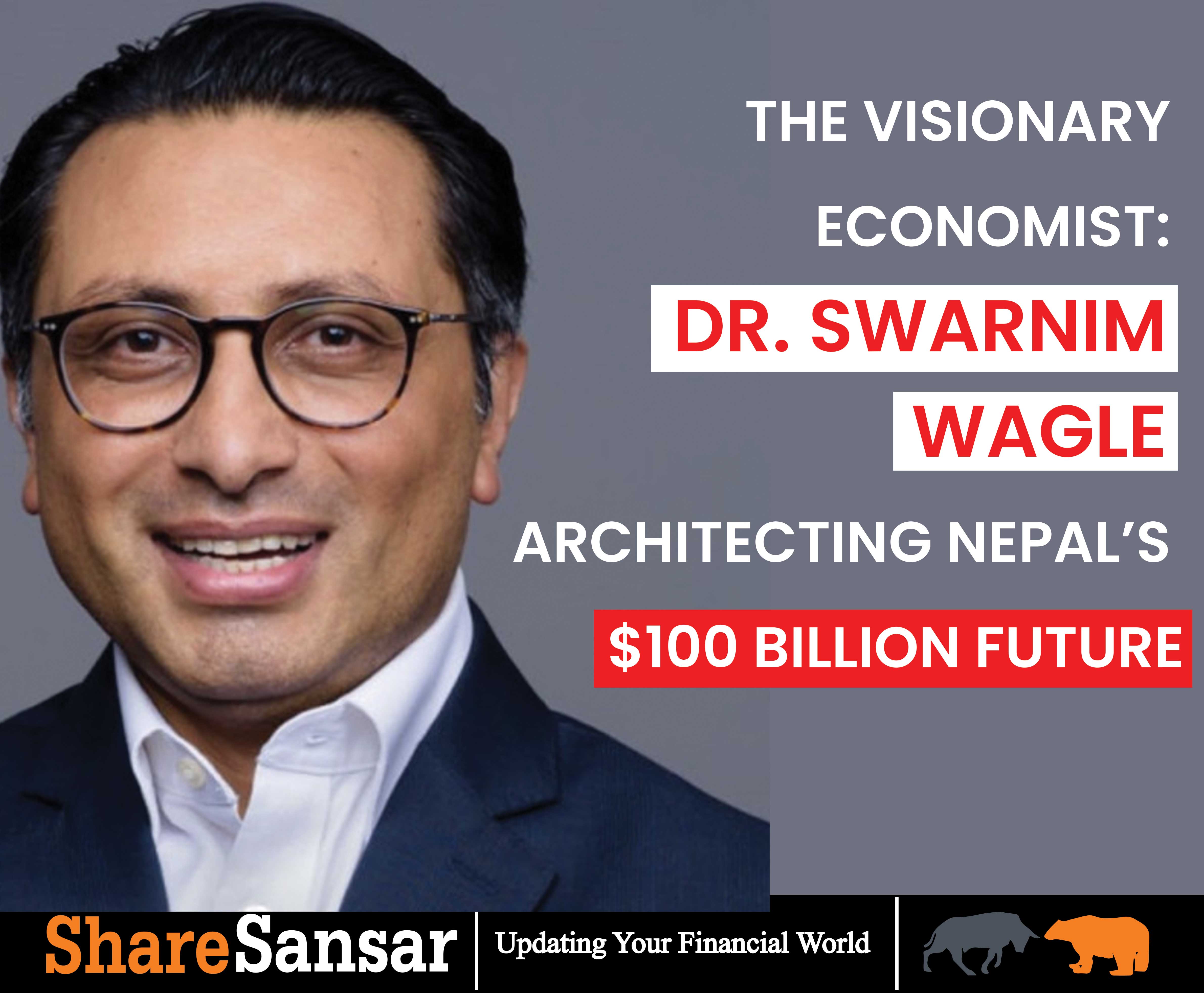
Dr. Swarnim Wagle enters the Ministry of Finance as a globally recognized economist whose appointment signals a definitive shift from traditional political patronage to a model of leadership defined by policy competence.
Born in Bungkot, Gorkha, the 51 year old finance minister carries an academic pedigree that is virtually unmatched in Nepali public life, having topped his SLC exams at Budhanilkantha School before earning a BSc in Economics from the London School of Economics, an MPA in International Development from Harvard University, and a PhD in Economics from the Australian National University. His professional background is equally distinguished, spanning over 25 years of high level international experience including roles as a Senior Economist at the World Bank in Washington, D.C., and as the Chief Economic Advisor for the UNDP Asia Pacific region in New York, where he oversaw strategic policies for 36 countries.
Within Nepal, Dr. Wagle previously served as the Vice Chair of the National Planning Commission, where he notably led the Post Disaster Needs Assessment that secured over $4 billion in international aid following the 2015 earthquake, solidifying his reputation as a master of economic diplomacy and crisis management.
As a core architect of the Rastriya Swatantra Party (RSP) economic vision, Dr. Wagle is now tasked with implementing a manifesto that calls for a radical departure from Nepal's historic reliance on a remittance based economy. The RSP's primary objective is to achieve a "Prosperous Nepal" by maintaining an average annual growth rate of 7% to expand the national economy into a $100 billion valuation within the next five to seven years.
This ambitious roadmap focuses on transforming Nepal into a digital first nation, aiming to increase IT exports from their current levels to $30 billion over the next decade while creating 1.2 million high quality domestic jobs to curb the mass migration of youth. The policy emphasizes structural reforms such as the dismantling of syndicates and cartels, the introduction of a "family burden" based income tax threshold to support the middle class, and the strategic utilization of clean energy to power domestic AI and data centers. By integrating all economic transactions into a unified digital platform and streamlining the business environment through the repeal of outdated laws.
Dr. Wagle and the RSP aim to foster a "Borderless Economy" where transparency, meritocracy, and production led growth finally replace the administrative lethargy of the past.

