

National Agriculture Policy 2083 Launched
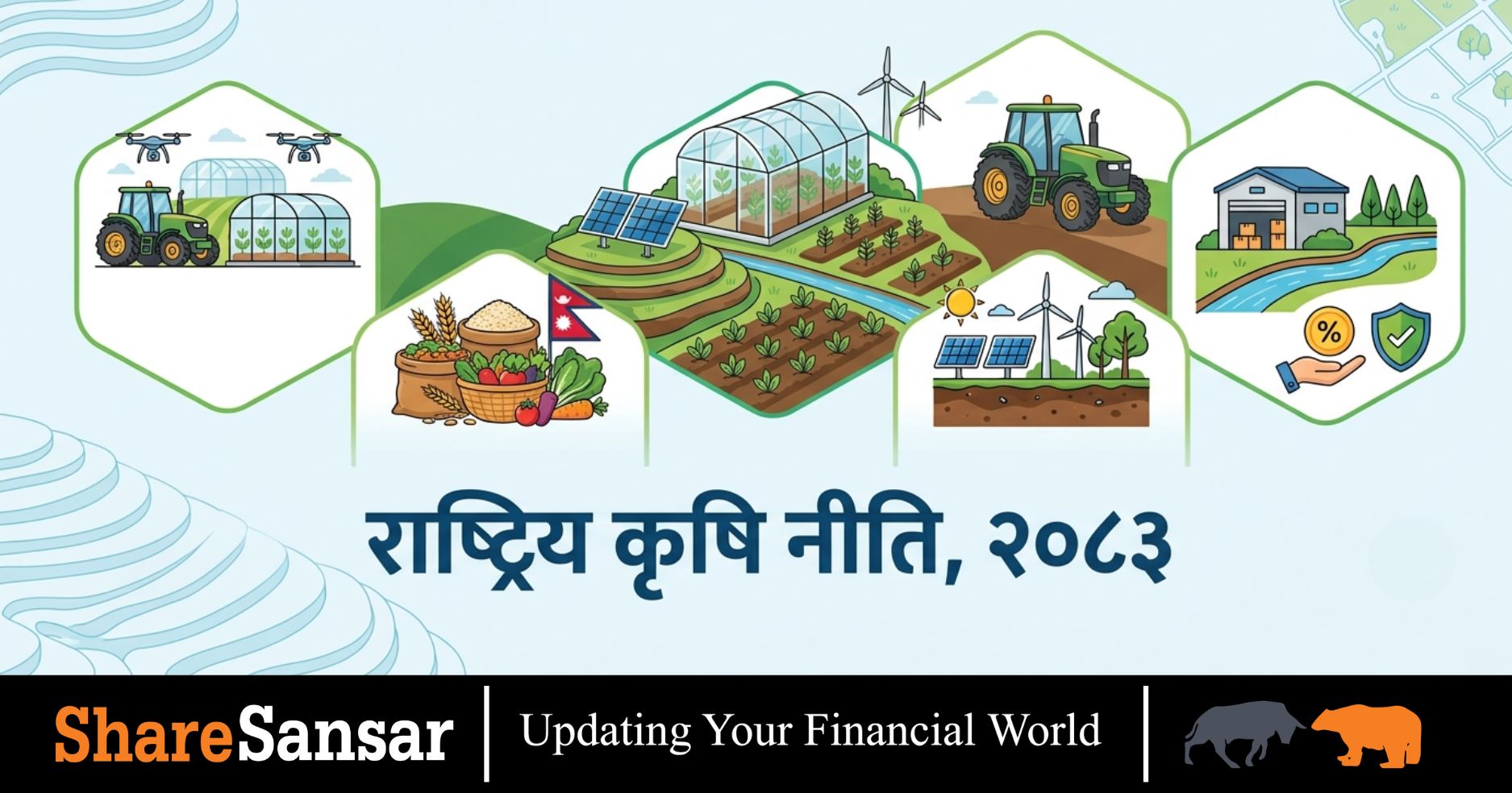
The Ministry of Agriculture, Forest, and Environment has officially issued the National Agriculture Policy 2083, aiming to transform Nepal’s farming sector into a modern, commercial, competitive, and self-reliant industry. Prepared in alignment with the country's federal governance system, the policy focuses on achieving food security and food sovereignty, raising farmers' incomes, increasing domestic agricultural production, substituting imports, and promoting farm exports.
Speaking on the launch of the policy, Minister for Agriculture, Forest, and Environment Gita Chaudhary stated that the primary objective of the new policy is to overcome existing sectoral challenges and establish a sustainable, production-focused agricultural system. The policy outlines specific measures to tackle major issues such as land fragmentation, the growth of uncultivated land, lack of irrigation and storage facilities, youth migration, the impacts of climate change, low productivity, and increasing reliance on imported food.
To achieve its goals, the policy establishes measures to gain self-reliance in basic food items, promote agricultural commercialization and industrial development, and expand into international markets by branding local farm products. It also stresses the importance of protecting biodiversity, developing environment-friendly farming systems, and incorporating digital technology, local knowledge, and innovation into agricultural practices.
Additionally, the policy prioritizes boosting farm productivity, promoting inclusive machinery use, conserving land, expanding agricultural research, and providing practical support to farmers through minimum support prices, subsidized farm loans, crop and livestock insurance, and improved food safety and nutrition. It further encourages investment from the private sector and cooperatives, soil health management, climate adaptation, stronger agricultural data collection, and efforts to establish farming as a respected profession.
According to the ministry, effective execution of the policy will rely on strong coordination among federal, provincial, and local governments, along with necessary legal structures, sufficient financial funding, private sector involvement, and regular monitoring and evaluation. The ministry expects that the successful implementation of the National Agriculture Policy 2083 will significantly contribute to food self-sufficiency, job creation, import reduction, export growth, and overall national economic prosperity.
Note: Image Generated by Artificial Intelligence

