

Finance Minister Wagle Urges Multinational Firms to Expand Investment in Nepal
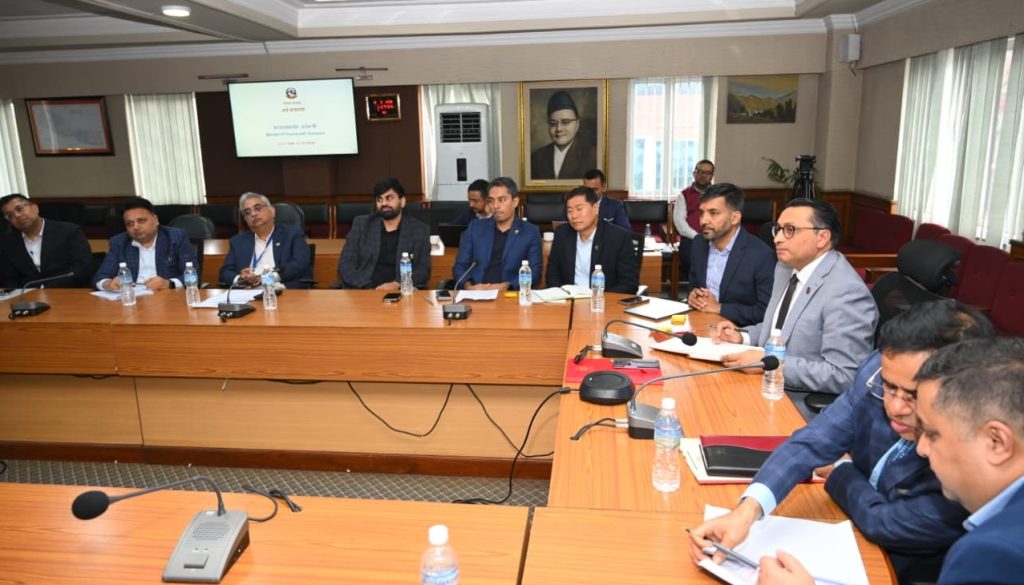
Finance Minister Dr. Swarnim Wagle held discussions with representatives of 20 major multinational companies operating in Nepal on Monday as part of the government’s ongoing consultations on the implementation of the fiscal year 2083/84 budget.
The meeting focused on the facilities provided to multinational companies under the budget, challenges they face while operating in Nepal, and measures the government can take to facilitate further investment, job creation, and the repatriation of returns.
Representatives from major companies including Surya Nepal, Ncell Axiata, Arati Strips, Gorkha Brewery, Himalayan Airlines, Hongshi Cement, Doosan Infracore, Dabur Nepal, Bottlers Nepal (Terai), and Unilever Nepal participated in the discussion.
Representatives from Asian Paints, Power Construction Corporation of China, Gorkha Lahari, Huaxin Cement, Narayani, New Hope Agro Business Nepal, Nepal Wellhope Agritech, Varun Beverages, Turkish Airlines, Bhotekoshi Power Company, and Berger Jenson & Nicholson Nepal were also present.
Addressing the representatives, Finance Minister Wagle said protecting legally made private-sector investments, assets created through such investments, and profits earned by businesses is one of the government’s primary responsibilities.
He acknowledged the contribution of the participating companies to Nepal’s economy and described them as among the country’s largest taxpayers, employers, investors, and partners in nation-building.
Wagle said the meeting was intended not merely as a formal interaction but as an opportunity to build deeper trust, cooperation, and commitment between the government and the private sector.
According to Wagle, Nepal’s economic transformation cannot be achieved by a single ministry, policy, or institution. He stressed that the government and private sector must jointly lead the country’s economic transformation.
The Finance Minister said the government wanted to listen to the experiences of companies that have made significant investments and taken substantial risks in Nepal rather than simply present its own position.
He said the government had sent a clear message through the current budget that the private sector would be viewed as a partner rather than with suspicion. He added that the government believes private-sector success is fundamental to Nepal’s broader economic success.
Wagle further emphasized that the government’s priority should not be limited to increasing tax collection but should focus on accelerating the cycle of production, investment, profit, and reinvestment. He explained that higher business profits can lead to reinvestment, increased production, job creation, higher incomes, market expansion, and ultimately greater government revenue.
Wagle stressed that investors need confidence that their assets are secure, regulations remain stable, the tax system is predictable, and the state stands as a reliable partner. He said without such confidence, attracting large-scale investment would remain difficult.
The Finance Minister also urged multinational companies already operating in Nepal to expand their existing businesses, enter new areas of production, introduce new technologies, and create additional employment opportunities.
He asked the participating companies to provide both verbal and written feedback on the incentives offered by the budget, operational challenges they face, and areas where the government can facilitate investment expansion and business growth.

