


Exports Reach Historic High, Lifting Foreign Trade to Record Level


.png)
Nepal has set new records in both the size of its foreign trade and export earnings during the first eleven months of the current fiscal year. According to data released by the Department of Customs, Nepal's total foreign trade reached NPR 2.172 trillion by the end of Jestha (mid-June), surpassing the previous record of NPR 2.120 trillion recorded in fiscal year 2078/79.
The latest achievement is particularly significant because the previous record was reached over a full fiscal year, whereas the current record has been achieved within just eleven months.
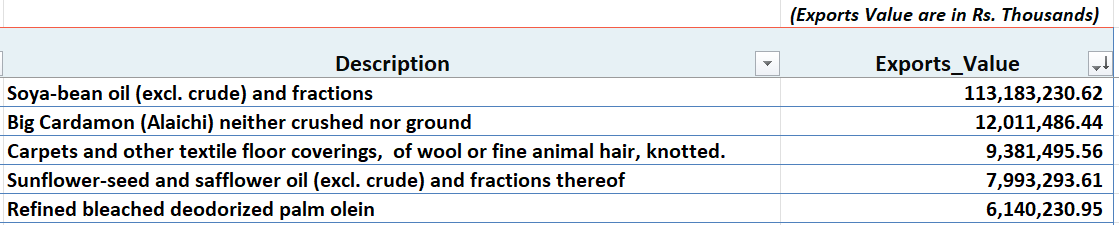
According to the Department of Customs, Nepal's exports also reached an all-time high of NPR 277.97 billion during the review period. Soybean oil accounted for the largest share of total exports, while cardamom remained the leading domestically produced export commodity, generating NPR 12.01 billion in export earnings.
Foreign Trade Reaches Historic High
Based on customs data for the first eleven months of fiscal year 2082/83, Nepal's total foreign trade volume stood at NPR 2.172 trillion, the highest level ever recorded.
Previously, the highest foreign trade volume was recorded in fiscal year 2078/79 at NPR 2.120 trillion. That surge was largely driven by a sharp increase in imports following the easing of COVID-19 restrictions. The post-pandemic recovery period boosted consumer demand, while rising incomes, remittance inflows, Bullish Stock market and increased purchasing power contributed to higher imports, resulting in a record trade volume.
This year, however, the record has been supported not only by imports but also by stronger export performance, making the achievement comparatively more encouraging from a trade perspective.
Exports at an All-Time High
Nepal's exports reached NPR 277.97 billion during the first eleven months of the current fiscal year, the highest level in the country's history.
For comparison, total exports during the entire previous fiscal year amounted to NPR 277.03 billion. In other words, the record established last year has already been surpassed before the fiscal year has ended.
Exports during the first eleven months of the previous fiscal year stood at NPR 247.57 billion. This means exports have grown by 12.28 percent year-on-year. The achievement reflects improving export performance, although sustaining this momentum will require continued efforts from the government, private sector, and export-oriented industries.
Foreign Trade (Up to Jestha)
Despite the record exports, Nepal continues to face a significant trade deficit, highlighting the country's heavy dependence on imports.

Soybean Oil Drives Export Growth
Soybean oil played the most significant role in this year's export growth. During the first eleven months, Nepal exported soybean oil worth NPR 113 billion.
Most of the crude soybean oil is imported from third countries, processed domestically, and then re-exported, primarily to India. While this model relies on imported raw materials, it still creates value addition, industrial activity, employment opportunities, and export earnings within Nepal.
Cardamom Leads Domestic Exports
Among domestically produced goods, cardamom ranked second in overall exports. During the review period, Nepal exported cardamom worth NPR 12.01 billion, nearly double the NPR 7.68 billion recorded during the previous fiscal year.
As a locally produced agricultural commodity, cardamom represents a more sustainable source of export earnings compared to products that depend heavily on imported raw materials. Trade experts argue that increasing exports of such products is essential for achieving long-term export growth.
Carpets ranked third among Nepal's exports, generating NPR 9.38 billion in export earnings. Although export earnings increased significantly, the share of exports in total foreign trade declined by 2.18 percentage points due to faster growth in imports.
Other major export products included:
Inflation Continues to Pressure Imports
Global inflationary pressures remain visible in Nepal's import bill. In particular, fuel imports have become more expensive. Nepal has paid higher prices for petroleum products despite importing relatively lower quantities compared to previous years. Consequently, monthly imports have frequently exceeded NPR 200 billion in recent months.
Evaluating fuel prices, the average customs-point price of diesel was NPR 88 per litre in fiscal year 2081/82. However, based on the first 11 months of fiscal year 2082/83, the average customs-point price of diesel increased to NPR 121 per litre. Similarly, the average customs-point price of petrol was NPR 86 per litre in fiscal year 2081/82. This increased to an average of NPR 100 per litre during the first 11 months of fiscal year 2082/83.
According to customs data, fuel remains Nepal's largest import category.
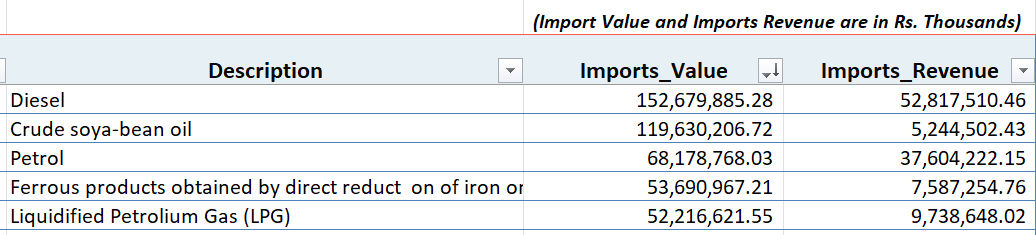
Nepal also spent NPR 112 billion on the import of vehicles and vehicle parts. Overall, fuel imports alone cost approximately NPR 343 billion during the review period. Imports of vegetable oils and ghee used as raw materials for export-oriented industries amounted to around NPR 162 billion.
These figures highlight Nepal's continued dependence on imported energy and industrial inputs, which remains a key challenge for reducing the trade deficit.
India and China Remain Nepal's Key Trade Partners
India and China continue to dominate Nepal's foreign trade. During the first eleven months:
India
- Imports from India: NPR 1.092 trillion
- Exports to India: NPR 228 billion
China
- Imports from China: NPR 382 billion
- Exports to China: NPR 1.58 billion
Argentina
- Imports: NPR 105 billion
United Arab Emirates (UAE)
- Imports: NPR 50.99 billion
- Exports: NPR 1.62 billion
United States
- Imports: NPR 29.10 billion
- Exports: NPR 18.58 billion
The figures illustrate Nepal's strong trade dependence on neighboring countries, particularly India. While Nepal enjoys growing export access to the Indian market, exports to China remain extremely limited despite substantial imports from that country.
Nepal currently trades with more than 158 countries worldwide. The country maintains a trade surplus with 34 countries, with the total surplus value amounting to NPR 994.3 million (NPR 99.43 crore), which is below NPR 1 billion. Among the surplus-trade partners, Denmark recorded the highest trade surplus for Nepal at NPR 72.41 crore, while Kyrgyzstan recorded the lowest surplus at just NPR 143 thousand.
On the other hand, Nepal faces a trade deficit with 124 countries. The largest trade deficit is with India, amounting to NPR 863.89 billion. The smallest trade deficit is with Papua New Guinea, at approximately NPR 40 thousand.
Conclusion
Nepal's foreign trade and exports have reached unprecedented levels during the first eleven months of fiscal year 2082/83. While the record export performance is an encouraging development, the country's trade structure continues to be characterized by high import dependence and a large trade deficit.
The growing contribution of value-added exports such as soybean oil, alongside locally produced commodities like cardamom and carpets, offers positive signs. However, sustaining export growth will require greater diversification, enhanced industrial capacity, and stronger promotion of domestic products in international markets.

